Tuesday, April 19, 2011

London to Amsterdam: Weather


The beginnings of our long-planned cycle adventure across Europe were less than modest, and more than fortunate. First, the ticket agent at the airport desk must have been in a particularly good humor, and waved us through with our bike boxes, allowing them to be checked free of the typical $100 fee. Through the inside advantage of having Kyle's mother hook us up with very cheap airfair to London, we also were able to ride business class on the 8 hour flight. This resulted in our staying awake through most of the overnight voyage to enjoy the fruits of the elite class, though I for one felt a bit bourgeois in my reclining chair, collared shirt and less-than-convincing straightened-up hairdo. Alas, I was forced to avert my gaze when the peasant folk from coach inched by, into their claustrophobia-inducing slum in the rear. C'est la vie.

Our imbibing of generously doled in-flight treats was tactful, not over the top, honestly. Though by the time we arrived at London/Heathrow at 10:30a.m., we'd had little to no sleep and could already feel the jetlag tugging at our eyelids. But press on we did, claiming our bikes and gear, and heading out into the British morn. An icy wind battered us as we assembled our bikes outside the terminal, and then a fine rain and sleet began to fall. Our boxes were whipped in every direction as we worked against the weather, until finally the last bolt had been placed, the last nut secured. After getting directions out of the world's largest airport, we were off.

The Grand Union Canal is an old waterway that weaves through town and country of England, between London and Birmingham. We rode about 8 miles out of the airport and to the small Paddington branch of this canal, using a towpath alongside. Journal entry from that night, 5/3/21010:

The woods are of comfort in any land. They pass no judgments, hold no expectations. All that is required of one in the woods is to be quiet and continue breathing. We found a place like this, along Grand Union Canal, near the London borough of Greenford. It seems a fairly safe place, a spare clearing amongst short and dense trees with vines wrapped tightly 'round every bough. We don't have the strength to carry ourselves further into the maw of Central London. Nor would we have any place to stay once we got there. This obscure nook will be our home for the night, our place of rest after a sleepless journey... ...After about 8 miles of cycling we reached the town of Cranford and descended the Paddington Branch of the canal. There was a narrow, muddy towpath alongside the canal, and we sloshed and slid among the ducks, swans, pigeons and geese. Longboats puttered along with their owners and tenants in the rear, manning the rudder levers. They live in these craft, roaming around the city's expansive canal system and mooring on the shores at night. We saw many on the ten mile ride toward London's centre. As we came to the halfway point, we happened upon a dark nook among the woods, about 20 meters from the water. It looked quite pleasant and discreet, and remarkably free of empty booze cans, trash or bumshit. After a meal and a pint at a pub, we returned to the spot and were overcome with fatigue, passing out before dark, our first night in Europe.


Kyle had met a Londoner a couple years ago, on a farm in Spain where they were working together. Her name was Amy and we'd been invited to stay at her place for a couple of nights.

Our time in London exceeded my expectations, both in duration and in enjoyment. We stayed five nights in the city of 8 million, spending much of our time cycling in the frenzied traffic. It didn't take too long to become accustomed to riding on the left side of the road, and we were soon flying past the black taxis and double-decker buses, splitting lanes and weaving through the loud, chaotic jams of Islington, Camden, Westminster, Parliament Square...

After leaving our campsite in Greenford, we continued along the canal a few more miles, the muddy path giving way to aged pavement. Buildings grew taller and more beautiful as we neared Central London, and joggers and other cyclists began to appear on the path. I was excited and anxious as the energy grew in the air, the sounds became more frenetic. London, called by many the most 'important' city in the world. Whatever that means. At some point we left the canal and ventured onto the streets, riding up to Camden. We had some food and gawked at the painfully hip. I've never been particularly interested in fashionable districts of big cities. Shopping is not one of my interests and seeing throngs of young people in the throes of transparent attempts to cultivate their image always depresses me. A couple of hours in Camden was sufficient.

We had great luck with the people we met in London, and with those fine folks who hosted us. Amy and her fiancee Tom were fascinating folks, and quite generous with their place. We also crashed on a wild night in Islington at Kyle's friend Ed's place. And our final two nights were spent in Hackney with a vegan chef and wonderful human, Adrian. He'd recently returned from a ten month bicycle adventure from the south of India to London, passing through Pakistan, Iran and Turkey along the way (all places I'm desperate to visit.) With Adrian we racked up many miles across the vastness of greater London on the bikes, and he showed us some of his favorite teahouses, resembling something you might find in a secluded corner of Amsterdam but not of London...

Our time in the city had been fantastic and productive. But the time had come to continue on, and get the journey underway. We felt as if we'd been on the move for ages but in reality had not even begun the task of cycling to Budapest, not even dipped our toes into the rushing river of uncertain experiences that awaited us. The time had come to move.

We rode out of London, through the lovely Epping Forest where I suffered my first tire puncture of the trip. We made about 50 miles that day, as far as the "Historic Maritime" town of Maldon. There was a large park and promenade along the inlet, and we searched for a discreet campsite. There was nothing ideal to be found so we picked the best spot, along a path in some trees by a creek. It was very cold, and the sun set late. As we were about to get into our tents, we saw a truck entering the park, spotlighting the fields and woods. It seemed he was making his nightly rounds, searching for intruders like us. We crouched behind our tents, as if we'd be hidden. The truck came near and stopped, and the spotlight beam turned directly upon us. It froze for a brief moment and we were certain we'd been seen. But the light turned away, and the truck slowly left the park. We were alone again, left to enjoy a cold and nervous night in eastern England.

Journal dated 5/10/2010
We arrived in the international port town of Harwich yesterday afternoon. We'd ridden from Maldon, a distance of 48 miles. All but the last two hours of the day had been miserable weather, which has been quite the norm since we've been in England. A light pissing rain came down on us all day, and a bitterly cold wind opposed us. Up the B108 to Witham, down the busy A12 to Colchester, and the A187 to B1352, winding finally down a rambling, quiet country road with the smell of cattle and flowers in the air, and the sea nearby. Our first business once reaching Harwich was to purchase our ferry tickets for the next morning. As we rode from the port toward the town centre, I was wishing for a squat nearby, conveniently close to the terminal for our early start. And as we passed along the North Sea cycle route, less than 1/2 mile from the terminal, what should catch me eye but a derelict house, lawn grown wild behind a crumbling outer wall. I stopped immediately and squeezed through a once-barbed door into the side yard, and was met with a passable hole (also attempted to be barbwired) in a door, low to the ground. Gleefully I entered and it was as it appeared: a ruined, decrepit, completely trashed old house. A mess, lots of broken glass, concrete and plaster. But more than suitable to squat, and what a location!
Pleased with our find, and glad at the prospect of avoiding the surprisingly cold British nights, we pressed into the town center and each went about our own tasks. We ate and walked by the sea, soaking up the first direct sunshine we'd seen since arriving in Europe. Eventually it was pub time, a reward for our 50 mile day in the rain. We found a quiet pub and were immediately greeted enthusiastically by the few folks present, and were bought our first two rounds by an earringed, spectacled fellow called Spick. Once a drummer for Iron Maiden (assuredly a true story, according to the pub patrons) he was impressed by our journey and lifestyle. We enjoyed high praise and an invitation to stay the night, drinking several pints of tasty English ale before saying goodbye to our adoring fans and returning to our humble squat, which received us equally well.
Heathrow-Harwich: 195 miles

After squatting in Harwich for the night, we arose early and rode only 1/4 mile to the ferry terminal. Before long we were aboard the ship and pulling out of port. In 6 hours we'd arrived in Hoek van Holland, downriver from Rotterdam about 30 miles. As we gathered our bikes below deck, about to disembark, we met an Englishman on a BMX who planned to ride to Italy. All his gear was in a backpack on his shoulders. He acted pleased that he wouldn't have to deal with heavy panniers, gears, and other such encumbrances on his voyage. We thought he was crazy. He thought we were crazy. Everyone in the world thinks everyone else is crazy. This is why we live in a crazy world. We wished him luck and pedaled down the long, steep gangway onto solid earth in Holland, my first time on continental European soil.

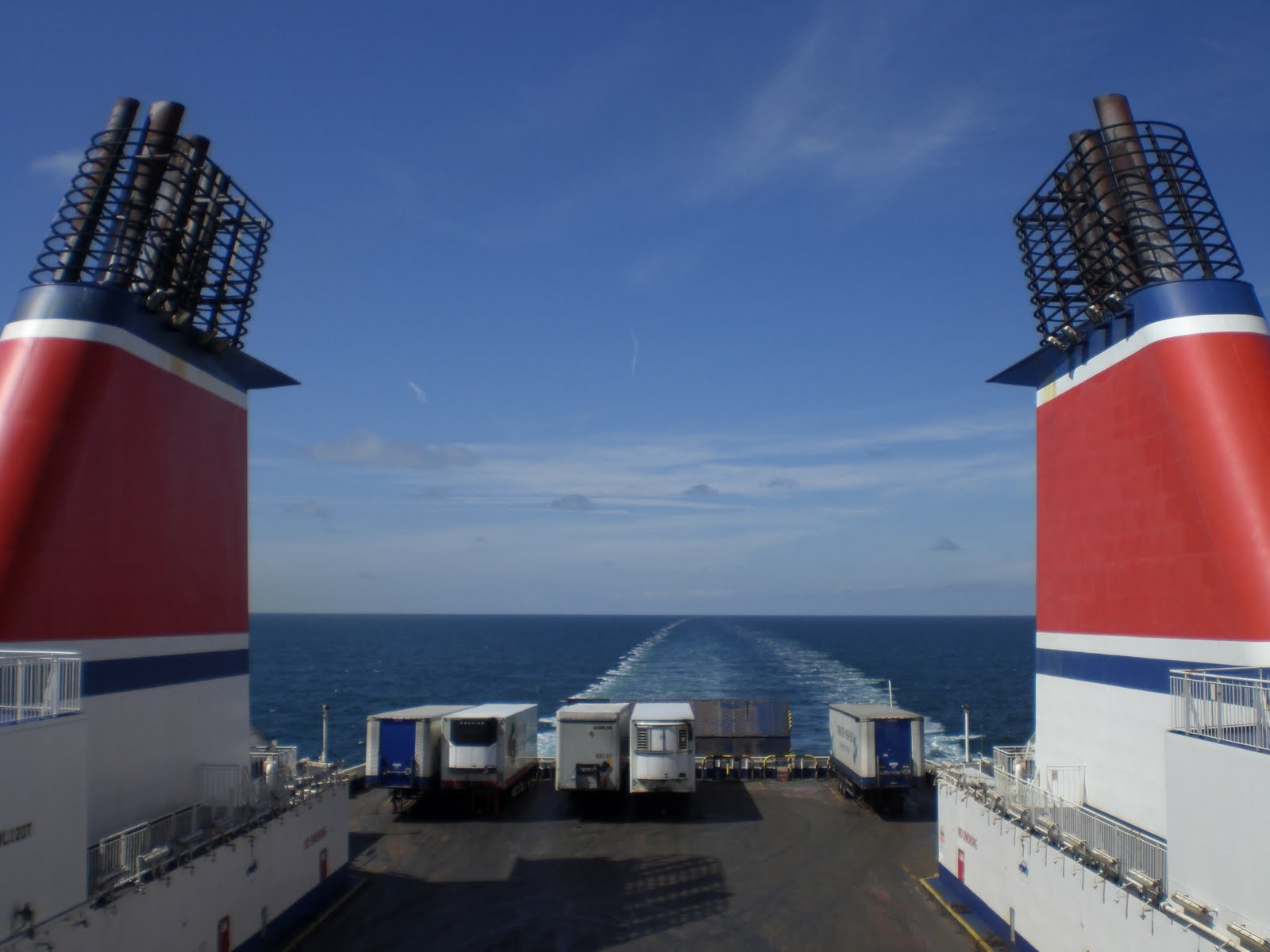
Immediately the language barrier struck me. Never before had I traveled in a place where I did not know at least some of the language. Dutch was, of course, quite foreign to me and I was struck with the realization that I wouldn't be in an English-speaking land until some unknown future time when I returned to North America. Here goes.
We stopped at Albert Heijn (a popular dutch market) for some groceries, and I felt a vaguely familiar sense of traveler's confusion. How much is this in US dollars? Where in hell are the beans? What am I going to say if the cashier asks me something? Why is all the produce individually wrapped in plastic? It's so easy to feel weak and stupid in foreign situations. Ordinarily I feel quite well traveled. Here I feel like a pathetic American dunce. I was reminded of a particularly heartbreaking scene from Malcom X's autobiography wherein he arrives in Mecca on his hajj, and is overwhelmed by the frenetic bustling of the devout. Malcom X, the great confident god of radical liberation, the unbreakable Hercules, humble and low in a foreign land, feeling stupid and clumsy and conspicuous, weakly struggling to understand, and struggling against self-loathing at his lack of understanding of the ritual and practice of that which he once felt such mastery over. We are all so confident in our own small niche, and it is these moments of humility that give us tolerance and perspective on how small our niche really is, and show us that we truly are but grains of dust.

Finally I clawed my way free of the supermarket, cheap dutch beer in tow, and we were off upon the LF fietspad Nordzeeroute, north along the sea and through the expansive dunes of coastal Holland But...not so fast. Two miles in, Kyle had to stop, complaining of a great pain in his knee. We'd meant to cycle halfway to Amsterdam that day, scheduled to be at our place to stay the next night. But Kyle seemed in a truly bad way. We saw a sign for camping and paid the 16€ for a grassy space and hot showers. There were other cycle tourists there as well; two dutch girls on holiday, and a gaggle of British enthusiasts down from Maldon to see the beginnings of some bike race in Amsterdam. But we were certainly the only ones with great ambitions to cross the entire continent.

I was disappointed to stop for the day, and to be obliged to spend money to camp. But Kyle's pain seemed sincere and I figured we'd best play it safe. Plus, I was in Holland, where every bird and tree and cold breath of wind was endowed with a special quaint majesty and magic. And cold, it was. We'd not yet caught a break from to weather, and even the Englishmen were quaking in their knickers against the freezing wind. I slept poorly, cold and distressed, but quietly ecstatic to finally be in the Europe of my life's fantasies, my WWII Europe, my green quiet countryside Europe, my peaceful cultured Europe of so many imaginations and dreams. I was there, at the beginning, the very genesis of the journey. At the hoek, the hook, I'd been caught, mouth agape, and slowly was I being pulled in.

By morning we had thawed out and began packing camp in the sun. We anticipated an easy day to Amsterdam, hearing it was a 65 mile ride and all flat. We opted to take the "green route," part of a countrywide cycle network and also part of the Nordzeeroute, or North Sea Route, which goes from Scotland to Finland. Soon enough we were in the rolling dunes with a strong headwind blowing in off the sea. It was hard work pushing against the cold wind, and Kyle was lagging because of his bum knee, so the going was slow but steady throughout the day. The dunes were expansive and beautiful, delicate in their uniqueness and harboring special endemic plant life in this strange intersection of sea and plain.


We passed through The Hague and Haarlem on the way. After a lot of laboring, we finally began to arrive in the outer reaches of Amsterdam, pressing further into the city, unsure of where we were or where we ought to be. Finally reaching the center of the city, we began to navigate to the nomad's base where we were set to stay. There was garbage everywhere in the streets, piles and mountains of rubbish on every corner. I was amazed at the departure from what my vision had been of Amsterdam, a clean and kept little city. I would later learn that there had been a garbage workers' strike for the past week, and the trash was piling high, with an additional week in the forecast.


Journal dated 5/14/2010
The streets of Amsterdam are calm, composed, remarkably orderly in spite of the city's activity and reputation. I've been very happy to find that this city little resembles its infamy. Certainly the foreign tourist can arrive and lose their wits in the coffeeshops and bars, treating this old and interesting European capital like a gaudy adult Disneyland. But this kind of hedonism can be found anywhere. Amsterdam's tolerance for drugs, prostitution, etc. do certainly contribute to the ambiance of the place, but do not define it. In reality it is a peaceful city with a pervasive sense of a high quality of life enjoyed by most. The cycle culture here is incredible, and there are (like in all of the Netherlands) miles of well-defined bike paths on essentially every street in the city. I read that there are four bicycles for every five of Amsterdam's 700,000 residents. This is not hard to believe when one witnesses the otherworldly melee of bikes whizzing around every corner, gathering in clattering droves at bike lane red lights, and being parked by the thousands on dedicated bicycle parking garages (multilevel) at Centraal Station. (The station has no parking area for automobiles.) One can easily get on any fietspad and be across the city in 1/2 hour without ever leaving a bike lane. Most Amsterdamers ride omafiets, "grandma bikes," with high handlebars and a low dipping top tube. They are mostly clangy and clumsy, but perfectly suitable for Amsterdam's flat, canal-lacerated terrain. In addition, bike theft is a huge problem. I heard that there are often more bikes stolen per year than there are bikes in the city, meaning some bikes get stolen more than once. They all stay in Amsterdam, sold at markets and pawnshops for 10-20 Euro. No one bothers to have a nice bike because it will only be stolen.


Needless to say, Kyle and I took extra pains to avoid such a fate for our bikes when we parked them in the Westerpark area of the city, where we would stay for four nights. The place was called Casa Robino, a "sustainable hospitality" space that hosted travelers from all over the world. The idea was that each guest was a host, responsible for contributing to all elements of keeping the space working, and for sharing in the exchange of kindness and open communication. Cleaning, cooking, dumpstering, answering the door; all of the guest/hosts did whatever needed doing in theory. Among us were travelers from USA, Greece, Germany, Finland, Israel, the UK, Estonia, Canada and Holland. Several of them had been at the Casa for several months, starting out just like any host and gradually atking their place in the more long term arrangement. It seemed to me that anyone that was truly engaged in the community was free to extend their stay if they saw fit. I believe, after spending a modest four days there, that I could definitely be happy staying there and enjoying the quiet pleasures of this novel form of communal living.

The people at the Casa were a diverse group, a natural element of the form of the place. The beautiful thing is that the group we became close with was but a snapshot, a brief moment in the timeline of the Casa, and surely now there are already many new arrivals, many who have come and gone, perhaps from Africa, Southeast Asia, Australia, South America...


The Finnish fellow, Topi, had sailed from Finland to Amsterdam, teaching himself to sail while braving the icy Baltic. He was also a brilliant computer programmer and designer, and had a bizarre and delightful habit of making farting noises with his hands whenever he was amused or pleased. A hulking Nordic man with long hair, to be seen rolling around on the floor in glee, laughing like a child and squeezing his hands together like a circus-style quiet applause. Mark was a razor sharp, techno-savvy, free-software-revolutionary Jew born in the UK and raised in Israel, with a desperate addiction to information. Heather was from Toronto with an African mother and Scottish father, and had been living in Australia for four years before setting out to return to North America by land and sea. She'd seemingly been everywhere, from Bangladesh to Iran, India to China, Laos to Albania. She often motivated cooking ideas from which the group would spring forth into the streets to dumpster food, and in a frenzy concoct large communal meals each night, shared around the large coffee table in the living room. Everything was so intimate, so small, very cozy and safe. I was content to spend hours each day talking with the various Casa comrades, cooking and cleaning and smoking. Casa Robino was similar to many communal urban living spaces I've seen before: the shared duties, communal meals, intimacy, responsibility. But there was something different about it, something that set it apart from the very focused and idealized experiments of the United States. First, it was dedicated to sustaining nomadic culture. It held travel and its social virtues as its first priority. It was an enabler, a catalyst, for the nomadic tribe to find itself and share of its constituent parts in a common place with a common need.

After a couple days in Amsterdam, I met up with Rose and she stayed with us for a couple nights. She'd been living in the UK for over a year, working on a makeshift rural community in North Wales, and had picked up a full British accent. It was a delight to meet with her and exchange our ideas and desires. She also wants to ultimately land in Arkansas and take over her family farm, not far from where I'd like to have my little spot. It was a joy to be with a familiar and cherished friend so far from home. A corn-detasseling, North American traversing, RNC protesting friend with whom I'd shared great memories in the past, and with whom I do believe I'll share much when we meet again on much more familiar soils. (Rose and I would much later meet in Spain and spend two weeks at Lakabe in the mountains. She's adrift in Africa now.)

Kyle and I left Amsterdam with both regret and exuberance. I could easily have stayed, made a temporary home of the Casa and of the beautiful city of canals and parks and good people. But we were riding a high wave, feeling both lucky and blessed at all our experiences we'd had so far as we were sucked into the journey, bit by little bit. It was time to see where else we could go, what other singular moments we could achieve, and who we would meet and come to love.

Wednesday, May 12, 2010

Thomas Wolfe said it best.


From a journal entry dated 5/6/2010, written on a street corner in London.

As I passed the time in Grapevine, waiting for the day of our delayed departure [for Europe], I thought often of the impending conclusion of my life's time on Kelsey Ct. Mom and Dad bought a house on 27 acres in Mineola, and were to move in mid-May. Thus, when I left the house for the airport, I'd give my final farewell to the home I'd grown up in and which I would never see again.

These thoughts manifested in nights of nostalgic melancholy, and nighttime wanderings through the quiet dark streets of my youth. As the time drew nearer, it became clear that my departure would affect me emotionally more than I'd suspected it would. Some nights I sat alone and lost myself in memory and lamplight, holding back calm sad tears. Ryan and I played a lot of basketball in the driveway, drinking beer and shooting hoops endlessly, late into the warming nights. The peace, simplicity and familiarity of home bore into me during those last couple of weeks, and I found myself wishing that I wouldn't have to say goodbye. In spite of the things that frustrate me about Grapevine, and that make me not want to be there for very long at a time, I love it as my home and value every memory it's given me. A flood of disjointed recollections overcame me, a mosaic of hazy imagery that flashed like filmstrip before my closed eyes.


My sacred innocence in childhood, running around the neighborhood beneath the tall, swaying oaks with the golden sunlight piercing through, casting puddles of brilliance on the grass. The weird confusion and sadness of my adolescence, awkwardly aging alongside my brother and under the care of my parents. Bewilderment. Hitting baseballs in the backyard, the riotous dramas of the neighborhood friends/enemies as we acted as children on the street. Swimming in the neighbor's pool, and then in a pool of our own. Riding our bikes off ramps of plywood and 2x4s. Digging holes as deep as we could, for no reason, angering our fathers for messing up their lawns, something we couldn't understand. Entering high school, sneaking out late at night, terrorizing the community with angst and antics, illicit behavior secretly enjoyed in my closet late at night, losing my virginity in the barn, having parties in the yard and all my friends trying to get mom and dad to stay up late with us. An endless barrage of imagery resides in my memory and it was all bursting forth. To think that I'd really be saying goodbye to my home was unbelievable. I knew the reality but somehow could not accept its tangibility. The loss of home, I think, cannot be understood until it is truly gone.

The day to leave arrived, and I was filled with anxiety and solemnity. I went about my final tasks sternly. Every moment was charged with sorrow and significance. I'd never loved my family more than on that day, though all I could do was remain stoic to keep from losing my tenuous composure. I was preparing to leave the house, and walked into the darkened hallway and into the bathroom to brush my teeth. I realized at once that I would trulyll never walk into that bathroom again. The moment had come when every instant in my home was immediate, present, lasting, always to be remembered as the final taste and smell and breath of home. Forever. I wept softly as I brushed my teeth.

Finally the moment had come, and mom and dad follwed me into the garage as I took a final glance over my shoulder and closed the door. I was fighting against sobs, and knew I couldn't hold them back. But I tried. I saw that I hadn't written address information on my box of panniers. I grabbed a marker and stooped, trying not to look into my mother's crying eyes. We were sharing our thoughts. I put my marker to the box:

Justin Spike
4004 Kelsey Ct.
Grapevine, TX 76051
USA

It took all of my strength to pen the last letter, a direction to a home that was no longer mine. I dropped the pen and heaved a great sob and shed the tears that had waited weeks to come forth. My love was profound and perfect in that moment, and all I could do to express my love was to cry for my home, prove my appreciation with my broken, pure and honest adoration. I knew that my sadness was real, not a product of any ego or jealousy or false sense of self but was truly and purely the most honest sadness I think I'd ever felt. Gone forever was something I loved, something ending to which I could never return for as long as I lived.

And we were in the car, driving to the airport, Mom, Dad and me. I walked into the terminal with Kyle and sealed my departure from home, punctuated with resounding finality the only stage of my life I've ever known, the one in which everything I love the most (home) is in Grapevine, Texas. The only tether which bound me has been cut, and I have no home. I am a foreigner loose in Europe, without an origin. Perhaps this is how it was meant to be.


Saturday, April 17, 2010

Chaos, Riot and Ruin.


Blog entry imported from http://coldalienshore.blogspot.com/

"Life in Europe is fast becoming, in the words of one Parisian newspaper, "la grande pagaille"--the big mess.

Virtually every airport is closed in England, Scotland, the Netherlands, Belgium, northern France, Poland, the Czech Republic, Sweden, Denmark, Finland and much of Norway, Italy, Bosnia, Croatia and Slovenia. -from TheStar.com


The unprecedented air traffic disruptions in Europe due to the eruption of a volcano in southern Iceland is costing airlines more than $200 million per day, and causing widespread travel and trade difficulties worldwide. Bummer. What this means to me and Kyle is that, like everyone else, our plans of flying to Europe have been dashed for the time being. We're still uncertain about when we'll be able to depart, but it seems as if it may set us back as much as a week.


Being delayed by calamity puts me back into the mind of a time I was stranded in Europe, first by rioting, then by a terrorist attack. The year was 2005 and I had just turned 20 years old. I had ventured to the United Kingdom with 6 friends of mine on a backpacking trip, and we'd made our way through England, Wales, Ireland, and into Scotland. Upon our arrival in the Scottish capital of Edinburgh, it occurred to us that the G8 summit of world leaders was taking place in nearby Gleneagles, Scotland. This resulted in massive protests and demonstrations across the UK, most notably in Edinburgh. Activists came from across Europe to participate in the protests, representing anti-authoritarian and anarchist groups from as far away as Greece and Turkey.


It was into these protests that we arrived in early July. Our intention had been to arrive in Edinburgh and do what we would normally do: explore the city, go to pubs, make friends and enjoy ourselves. But when we stepped onto Princes Street from Waverly Station, the city's main thoroughfare was choked with throngs of people and a glorious cacophony. The crowd was conspicuously mixed, with black-clad anarchist black blocs congesting the streets as business people, tourists, journalists and gawkers trickled through, trying not to get caught up in the chaos but enjoying the excitement of the spectacle.

My friends and I, being the young mad Americans that we were, appeared to the casual glance to be more affiliated with the rioters than with anyone else. That is to say, all six of us were either punks or had long hair and regardless of our intentions at the demonstrations, we were assumed to be present for one reason only: to fuck shit up. This was not a terrible disappointment to us, and we busied ourselves exploring the ancient cityscape of old Edinburgh through the eyes of casual participants in its destruction for a couple of days.


The riotous condition of the city cannot be overstated: it was a total mess. The simple act of heading out into the street in search of, ohh I don't know, a pub, was transformed into a protracted adventure with unknown conclusions. We ventured toward Arthur's Seat, a tall mountain outcropping that overlooks the city, to find some peace in the quiet of the Highlands. The six of us climbed upon dark rock and mossy earth under a billowing sky of gray cloud. Rain threatened and cast a pallor of static and motion upon the sprawling city that lay beneath us. Dense crowds of writhing humans could be seen far below us, lodged in the narrow streets between rows of buildings, but the chaos could not be heard above the kind breath of the wind blowing in from the visible sea. We were happy to be away, above it all. To observe such a scene from above turned the lens into a much clearer perspective for me personally. It was a moment of peace but of disappointment, seeing that all of the screaming pleading demonstrators down below, intensely absorbed in the moment of their fury, had voices that carried only as far as the ringing ears of their neighbor. Not even the riot squad police, heavily clad in robotic garb and wielding giant shields, could hear or comprehend their insistent voices. Nor could we, as we breathed deeply the salty air and were glad to be together as friends, explorers of the world.


We made a number of additional forays into the fray, evading police brought in from Glasgow, Manchester, and even London. I've been told that the reason riot squads are brought in from distant cities is that they have no sentimentality, no soft spot for the people or the city into which they've come to restore order. A Londoner flinches little to bash a Scotsman in the nose with his club, or to spray mase into the eyes of a young woman from Edinburgh, because they are not his people and Edinburgh is not his city. A couple of my friends were detained and nearly arrested simply for their presence in the chaos, and presumably their physical appearance. But I will say this for the European-style street demonstration: In the UK, the police do not carry guns. This changes profoundly the tone of a protest, and I believe everyone involved felt quite at ease in spite of the tumultuous conflict that exploded all around us.


In one particular instance, we were heading back toward our hostel from a pub when a loud and dense bloc of protesters caught our attention. In a narrow alley hemmed on both sides by tall buildings, a standoff was occurring between a rectangular bloc of humanity and a uniformed, masked, shielded brigade of riot police. The police were determined to deter the mass from proceeding through the alley to Princes Street. The mass, in all likelihood indifferent to where they were headed but intent on disobeying the police, stood fast and gained participants, and the mob grew in size and noise. The front line of the mob locked arms and marched into the riot police, turning their backs and leaning against the shields. Cries of hate and fury would ring out when a police officer would shove someone with a shield, and the mantra would be, "Peace! This is a peaceful protest! Fascists!" Then the same voice would grunt with exertion as he would pry a cobble from the street and hurl it indiscriminately into the group of gestapo-esque policemen. The tone of the confrontation gradually spiraled into a wild pitch of screams and impending catastrophe. A dumpster was uprooted and pushed toward the line of police, and we decided we'd seen enough and left the scene before things got out of hand. The next day the local papers were plastered with photographs from that very alley where the clash became a bit bloody and many arrests were made.


We felt good to have gotten out of the mess before it exploded in our faces, but the bitter taste of disappointment lingered in our mouths. It was frustrating to walk all over the city and see the glaring assault of hypocrisy everywhere. As sympathetic to the demonstrators and demonstration as we were, it was hard to overlook the cries of "PEACE!" while bricks and newspaper machines filled the air like a bonanza of killer birds amok. The disparity of tactics by the anti-authoritarians was, as usual, heartbreakingly divided and counterproductive. Perhaps we weren't accustomed to the tolerance and relative gentleness of British law enforcement, because they seemed to us to at least be un-cruel, as they so often can be in America and most other places in the world. It was a disenchanting scene and we opted to flee to Sterling to catch up on some history and solitude.

Arriving in the quiet of Sterling was a tremendous change for us. We'd encountered nothing but bedlam for some time. While in Edinburgh, in addition to the rioting and protests, London had been declared the host of the 2012 Olympics. Apparently this was a matter of colossal importance to many Britons and the entire island went berserk with celebration. Meanwhile, I had run out of money and had only enough left to get me back to London and onto a plane at Gatwick airport bound for Dallas. After exploring the town of Sterling and some William Wallace/Robert the Bruce sanctified battlefields, we took a train back into Edinburgh where I was to cram my things into my backpack, board a train for London and leave my friends behind.

It was not to be this simple. Not at all.

I bade my farewells to my traveling partners of the last month in the UK and walked back to Waverly station, glad to be escaping the mess. It was only when I entered the station that I realized the mess had just grown by exponential leaps and become not one of mere chaos and stress but of death and carnage. The station was abustle with people clearly confused and afraid, and I had no idea that London's buses and Underground subways had just been bombed, killing an untold number of people. Then I spotted the BBC news ticker-screen high in the rafters of the station and was unbelieving of my eyes: LONDON ATTACKED! AT LEAST 30 DEAD AFTER TUBE AND CITY BUSES BOMBED.

People were crying and running about frantically, doubtless concerned for all the many people they knew in London. Specific details regarding the bombings were not yet available and everyone was left to speculate and panic. Help desks at the station were clogged with people desperate to find out what they could do to get to London. I managed to get a brief moment with one of the desk clerks to ask the same question, telling her I had a flight leaving the next morning. She told me impatiently that there was no chance I was going to make my flight and that no one but no one was getting to London that day or the next, and that I'd be well advised to reschedule my flight.

I sat down with my backpack to consider my options, fretting not only over the horrific news but also of how it had flung asunder my plans of returning home. I was still only freshly 20, all alone and confused, and broke as a joke. I suppose hitchhiking didn't occur to me at the time, or I would have gone that route. But I was determined to reach London and the airport by the next morning and began scanning the train timetables and maps to see what was still operating, and get myself on a train to get as close to London as possible.

I saw a route bound for Peterborough, 80 miles north of London. I asked a stranger urgently if they knew what platform the train departed from, and he sent me to the second level of the building. I sprinted up the stairs and across the station, my backpack bouncing on my shoulders, and I jumped on the train as the doors were closing and it sped from the station and into the Highlands, bound for Newcastle-Upon-Tyne.

It was a relief to finally be someplace where I had no obligations, nothing to accomplish. I was upon a fast moving train and all I could do was wait. I calmed down a bit and tried to enjoy the rest. I opened a newspaper and read the news of the day, written only hours before the United Kingdom would be violently changed forever. It seemed nice. The bombings would come to be known as 7/5, the UK's comparable 9/11. I remembered a two litre bottle of cider that I had packed for the trip, and hastily dug in my pack for it. It was cheap high-octane swill, but it tickled my mouth and nose and a wave of calm spread down my back and into my limbs, and my head swam.

As the slow hours ticked by and I floated in and out of consciousness, I became aware of a boisterous American fellow engaged in conversation a few seats behind me. I gathered from his bombastic verbal vomitus that he was from Baltimore and was also bound for London. It gave me hope to know that there were others on the train like me, heading for London and.....Ahhhh, the United States. But this Baltimorean annoyed me and I didn't want to team up with him, regardless of how it might help us both. I decided to neglect introducing myself and ignore his explosive laughter and arrogant manner of speaking. The Yank.

Those of us bound for Peterborough detrained somewhere in the middle of nowhere to transfer. It was late at night and everyone was exhausted from many hours of traveling. I sat on a bench and tried to sleep, and heard the baritone of the jovial Baltimorean approaching from behind me. I couldn't avoid him any longer. He walked past my bench and we locked eyes, and he smiled and nodded and asked, "Hey big man, where you headed?"

I suppose I looked awfully young, in fact I'm sure of it. My American accent further instigated him when I said with disinterest, "London, like everyone else.

His eyes lit and he made himself a seat on the bench next to me, extending his hand and introducing himself as Jamie. He has a red face and red hair, was rather portly and spoke like a person proud of their intellect. I don't remember precisely but something makes me think he said he'd gone to Harvard.

As I talked to him and got to know him a bit, I began to appreciate his loudness and sort of bookish conviviality. We decided we'd stick together and make sure we both made it to London on time and in one piece. It was midnight in rural England, the air was warm and wet, violence was in the air and the land was dark.

Three hours later we had acquired an additional comrade: Gregor, a Scotsman headed to London to visit his young son. He had been prowling the aisles of the train between the middle of nowhere and Peterborough, recruiting co-conspirators to put their money together and get a cab to come from London and pick us all up. It sounded like a wild plan, and costly, to get a London cabby to drive out into the night, 90 miles across the countryside to a gaggle of stranded travelers who say they'll be in Peterborough and pay him his fare. But we had no better plans, and Gregor had taken the initiative to get 12 people onboard. By the time we reached Peterborough, at two in the morning, everyone was mad with fatigue and anxiety. We scurried off the train, gathered our stuff, and kept our eyes on Gregor. Out into the dark parking lot and into a waiting cab, sure enough, waiting for us to cram ourselves in like sardines in a can. Twelve people and their bags, cross-hatched on two bench seats and a cargo area, stacked two and three people high, utter strangers on each other's laps afraid and weary and ready to see what happens.

Into the darkness we went, laughing and telling jokes, taking turns in the more comfortable spots, and enjoying the close quarters in spite of ourselves. In the smiles of the strangers-turned-friends in the cab, illuminated periodically by the highway lights careening past, was the faith and goodness of human people leaning on one another when they needed help, needed rest. I was but a young American. I didn't have any loved ones in London, no one whom I'd been unable to contact. I was just lost and trying to find my way back to Texas. And there was the Baltimorean, keeping us optimistic with his good nature and loud baritone. And Gregor the Scotsman, telling ridiculous jokes and smiling wearily, his sad eyes betraying his need to be with his son. There was a teen aged Englishman headed to his rural home from a soccer tournament, and a Londoner with her French friend headed for their apartments in Camden Town from holiday in Glasgow. It was a remarkable illustration, to tangibly see 12 people gathered together (together, indeed) by completely random circumstance, share moments and come to value one another, and know that in less than an hour each of them would go their individual ways, all over the world, and never see one another again.

Indeed, at 4 A.M., the cab dropped the last three of us off in Trafalgar Square. There was me, Jamie, and Gregor. The square was utterly deserted. It is one of London's most conspicuous and most active public places, and there wasn't a soul in sight. It would be akin to arriving at Times Square in New York City and hearing only the wind. We stumbled about on cramped legs for a few minutes, taking in a scene that would probably never be replicated again. Then we decided we needed beer.

As we tried to find a vendor that was open, Gregor dropped a money clip from his pocket and onto the sidewalk. I noticed and picked it up, noting that there were at least 200 Pounds in it, around $400. I caught up with him and handed it to him with a smile, as if to say, "Look how close you came to disaster, you jackass." His face was disbelieving, shocked, and he smiled and gave me a big hug. After what we'd been through that wild day together, he was still surprised that I returned what was his, I suppose. He bought my beer and a little extra for the road.

The time had come for me to begin making my way to Gatwick airport. Jaime, Gregor and I shared a farewell and assured one another that we'd meet again in the future, knowing that we wouldn't. Each on a different bus, (running for no fare during the catastrophe) we parted our ways and I headed to Victoria station, sleeping in the alley until 6 A.M. when the trains began running to Gatwick. I was exhausted to falling over, ontop of the beer, and managed to mindlessly navigate to the proper gate at the airport. I arrived just in time for a brief nap before boarding my plane, the plane the lady at Waverly Station said I'd never make, 24 hours before.

Wednesday, April 14, 2010

Resurrection!

It occurs to me that it's been well over a year since my last post on this blog. What a year it's been! I consider it a pity and even a matter of shame that I haven't chronicled the last year's journeys in this blog. God knows there's plenty of material to draw from, in my notebooks and my memory. But my inner Luddite has taken a fistful of my insides of late, and as a result my electronic recordkeeping has suffered a hiatus.

But a hiatus only! I'm leaving in 6 days for a long bicycle trip in Europe and I do intend on making frequent "dispatches from the road." And pictures, there will be many pictures. In truth, I feel more compelled to write lengthy diatribes lately than I have in some time, and I really look forward to more literary productivity. I'm tired of writing only for myself. Now you, the innocent reader, must suffer my awakening. I also promise that I will post photos and words from my bike trip in Hawaii, my trip to Alaska, musings from a migrant farm worker, etc.

Please do visit, from time to time, and let me know you're reading. I can say with a humble heart that it will be worth your time, I promise. I'm a maniac of imaginings right now and I can only assume that I'll have even more to say when I'm actually upon The Continent and not in a living room in Grapevine, Texas. It's gonna be nuts.

<3 Love

Friday, November 14, 2008

Bicycle touring in Oaxaca, México

The following was taken from journal entires dated 11/2/2008-11/11/2008. I have made some omissions and also elaborated on the journal where it seemed necessary.


11/2/2008
It’s time I began recording the details of my Mexican bike tour, the first 5 days of which I have spent in Cuernavaca with Stephany and her family. It has been good to be back here, in the doting hands of the Spíndola clan. As has become the usual, I was treated like an honored family member with my breakfasts of fresh fruit, bean and avocado tortas and coffee served to me in the garden. I’ve spent the mornings eating slowly and talking to Stephany’s mother Lily, who is never at a loss for words. She is truly a teacher at her core and seems more determined to teach me Spanish than when she was being paid to do so two years ago. (Has it been that long?)

After long conversations with Lily in Spanish, I would lie in the hammock and read or study, sheltered from the mild sun by guayaba and pear trees. My Spanish improves by the day, and there is little I miss in the protracted and fast soliloquy that Lily belches forth. In the garden, we discuss politics, culture, economics, family, travel; we are learning from each other what perspective is had by extranjeros, members of a different culture, a different country. We agree on a lot of things, and sometimes we catch ourselves in stereotypes we have of each other, and both of us are eager to correct the other’s oversimplifications. After a while, Lily busies herself in the house or the garden and I continue my studying.


Luís, Stephany’s father, is the same as ever: a joker and gentle patriarch that seems to know everyone who crosses his path, and if he doesn’t know them, he manages to start a conversation and they are friends thereafter. He reminds me of my grandfather, possessing a socialability and likeableness that he seems to have been born with, a strange gift that compels every soul who hears his voice to smile and open their mouths in eager conversation. But he is no socialite, no smooth-talking bullshitter. Last year, this man read my palm and told me my future as we sat late at night in a darkened kitchen, smoking cigarettes and discussing fantasmas, ghosts that seem to wander profusely in México. An ex-Army engineer, Luís is now a professor of Spanish literature, and has studied many subjects, including metaphysics. He can manipulate energy. He has seen many ghosts in his life, but he is far from superstitious. “Religion is slavery,” he has said to me. “Religion is slavery and fear, and it forces the people into the bondage of their fears.” It is easy to see, he says, when studying Isaac Newton and Albert Einstein, the way energy works. It cannot be destroyed, it only changes form. And where does it go when it leaves a living body? he asks solemnly, his gold-framed teeth glinting in the soft yellow light. He is one of the primary reasons I get nervous alone in the dark in México, getting up in the middle of the night in the house that Luís built with his hands. There are just so many ghosts.

And then there’s Stephany, still studying medicine, spending 12 or more hours per day in class or at the hospital, and still managing to fit a little fun in her life before coming home and studying all night, sleeping 4 or 5 hours, and waking early to do it all again, every day. Her energy, determination and resilience amaze me. More so than most Mexicans, she feels no limits upon her desires. In spite of the infuriating bureaucracy, patriarchy, corruption and inequity of México, she wants everything for herself: to be a doctor, a traveler, an artist, a musician, and still more. It is common in México to choose a path (or more often, have a path chosen for you) and follow it dutifully. The culture does not encourage spontaneity or big dreams. It needs dedicated laborers to turn the gears of the clumsy system, not broad-thinking, desirous souls with their heads in the clouds. But Stephany is not afraid to disrupt the flow of this system to get what she wants. In México, Stephany Spíndola is considered a troublemaker.

It was with this unique and humble family that I spent my days in Cuernavaca, this year and last year and the one before that. As usual, my stay was characterized by much imbibing of chelas and straining to hear the words spoken to me in a foreign language over the pounding din of a bar’s stereo. We also went to festivities for Día de Muertos and Halloween, and on one day, the parents and I ventured to Tepoztlán where I climbed to Tepozteco pyramid for the third time, and again visited their wonderful market. I’ve predictably had to break somewhat with my vegan diet by eating quesadillas and gorditas with some cheese. And, a bit regrettably, I even ate jumíles, small beetles eaten live that were gathered in the forests outside of Taxco, Guerrero. They taste somewhat like a stinkbug smells, but with a strong shot of spice that explodes in the mouth at the moment the teeth rupture the abdomen. I didn’t like them as much as I liked grillas, grilled crickets.

While in Cuernavaca, I’ve had to track down some tools for my bike that I didn’t have time to purchase before leaving the United States, and also maps of Oaxaca and Chiapas. Now I am totally equipped to begin my journey, lacking only food for the road and fuel for my stove. My intended companion for the trip, Lana, informed me a couple days before I left for México that she would be unable to accompany me. She is a forest fire fighter in California, and was held on her crew because of continuing fires late into the season. But, my bus ticket already bought, I came to México to do the same trip as intended, but alone.

Last night, Stephany and I sat on the rooftop and smoked some marijuana that she’d been given for her birthday (in May.) Lying beneath the low clouds with the Sierra Madre all around, I couldn’t believe what an ambitious and perilous adventure I was about to undertake. For my first bicycle trip, I am venturing to and through one of the most untamed regions of the continent, through areas of great political instability, and I’m doing it all alone. I have a feeling of how crazy this plan is, but perhaps due to my recklessness or uncompromisingly adventurous spirit, the gravity of the plan does not seem clear or immediate. Perhaps tomorrow night when I am in the mountains of Oaxaca, searching for a place to pitch my tent away from the potential dangers of curious or hostile bystanders, I’ll have a greater sense of the reality of this voyage. Until then, I continue to adapt and learn, and hope for the best. There is always the presence of a little bit of trepidation before a trip, especially in a foreign land. And I am aware of the very real possibility of having some of my equipment stolen or being robbed or mugged. But for this first time, on this voyage, I feel like it’s possible I won’t make it back home alive.
------------------------------------------------------
The bus ride from Puebla to Oaxaca was indescribably beautiful, literally breathtaking. There were mountains that I could scarcely believe I was seeing, they seemed to defy possibility. There was no sign of a town for many miles, mostly because there wasn’t any place to put one, and the sierra was covered in agave, yucca and saguaro cactus. I spent a lot of time inspecting the highway to see how favorable it might be for cycling, and it wasn’t bad but definitely unsafe. I understand my route has even less of a shoulder most of the way to Chiapas. In addition to my worry of being accosted by hostile thieves or political guerillas, I’m worried about how safe I’ll be on the highway. Mexican drivers are notoriously reckless, and drunk, and I’ve been having fleeting feelings that I’m in over my head and that I’m not being realistic about the actual circumstances of this proposed voyage. But I’m in this far now, and I can’t turn back. If I can do this, I can do anything.
----------------------------------------------------------
After arriving at the bus station in Oaxaca, I set to work reassembling my bicycle. It took some time and a couple of curious onlookers made conversation, but just after sundown, I rode off through Oaxaca City to find one of the cheap bodegas I’d found on the Internet. After a bit of wandering and asking directions, I made my way to the closest option, a few kilometers away. Down a few dark streets (down Ninos de los Heroes de Chapultepec, left on Avenida Crespo, right on Al Fortín, left on Ignácio Cononfort, #108) But no one was home, so I asked at a nearby shop, and they sent me further down the street to an apartment that was for rent monthly. The landlords, who live below, seemed a little confounded by my desire to rent for only one night, and even more so by my plan to ride my bike to Chiapas. But they agreed to let me stay, and brought me sweet pan de muertos and coffee. We chatted for a while, and they asked 200 pesos for the night. This was way above what I was willing to pay, but it was getting late and the dark streets I’d ridden through to get here didn’t seem inviting. I offered 150 pesos (about $13) and they agreed.

The apartment is good sized, with two small bedrooms, a small kitchen, a sort of dining room and bathroom. It rents for 2,500 pesos per month. The previous tenants were Argentine artists, I’m told. I assume because today is the final day of the Día de Muertos celebrations, it’s noisy and there are fireworks going off all over the city. I feel a bit nervous and unsure of myself, but I must press on and adapt to all that comes my way. I just hope the highway is rideable. I’ll be very glad to be out of the worrisome chaos of the city and in the familiar solitude of unoccupied expanses. God, I’m worried about the roads.

11/3/2008
My bike is locked outside the large indoor market of Oaxaca. I’m inside drinking coffee from a clay bowl, sweetened with world-famous Oaxacan chocolate. I’m looking for a frutería so I can stock up before I head for Chiapas. I have a little bread and some water. I’m a little worried about my bike. I don’t have change for this coffee.

----------------------------------------------------------
After about three hours of riding, I arrived here in Santiago Matatlán, the self-proclaimed mescal capital of the world. Most of the ride was enjoyable, flat, and there was a narrow shoulder on the autopista. But after the highway split for Mitla, the hills increased and there was no shoulder at all. My left calf began to cramp and I was unable to compete with the hills, and actually had to walk my bike up a couple of them as the traffic screamed past me. It was beyond frustrating and humbling. It was worrisome, that only a few hours and 45km into my first day, my legs were spent and I hadn’t even hit the serious mountains. The weight of my panniers is quite apparent on the climbs.

Thinking (rightly) that my cramping was due to my meager breakfast of a banana and coffee, I stopped in Matatlán for some food. The town seems to have around 2,000 people, with a small zocalo and cathedral. The smell of fermenting agave wafts through the dusty air, and mountains stand high above the town. The streets are paved with concrete, not blacktop or cobblestone, and the blocks are relatively featureless. The town has a strange feel. From this spot, comedor El “Pirul”, where I sit eating my mushroom quesadillas, the road appears to head into the mountains, and the locals tell me it’s about to get a bit hairy.

While sitting here eating, a woman approached me and sat down next to me, asking what I was doing and where I was going. We chatted for a while, and she mimicked what every other Mexican I’ve spoken to has said about the trip: it’s very dangerous, and there are bad people, gente mala, bandidos. The consensus seems to be that I shouldn’t camp. I should find rooms to rent in the villages. Anyway, this woman invites me into her home across the street and shows me the altar she’s built for Día de Muertos. There were many offerings to the dead, like tamales, fruit, beer and mescal, money, etc. A photograph of her dead nephew sat at the center of the ofrenda, colorful regalia dedicated to providing the dead with their favorite things in life, but in the next world. She insisted that I take a photo, and then she gave me an apple and an orange. It was a custom, she said. I feel better having eaten and having experienced such kindness from a stranger.


But a warm heart won’t get me the next 32km to San Pedro Totolapan, my goal for the day. It’s about 8km to Ocotepec, the next village, so I’ll see how I feel when I arrive there. I definitely don’t want to head past it and not be able to make it to Totolapan, because it’s 24km between the two and absolutely nothing in between. Andele.
---------------------------------------------------------------
Leaving Matatlán was immediately excruciating. The road leaves the town at a significant grade, and halfway up I had to stop to let my quesadillas settle, meditate in the shade and gasp a few chesty breaths at the profound loneliness of the place I found myself in (in the mountains of Oaxaca, agave and saguaro growing on the mountainsides, the far off sounds of herders scrambling down rocky slopes behind their protesting goats, the cruelty of the sun this far south and this high up) and the simple fact that I am a very long way from anyone I know, not just in distance but in condition. I am very much on my own, and I’ve no chance for help but from my own resourcefulness and the good will of those I meet along the way.

Which is exactly what landed me my place to sleep tonight. After leaving Matatlán, I labored up a mountain with more than considerable difficulty (I was ashamed to have to stop every few hundred kilometers and take a short rest.) Several times, I felt stupid for getting myself into something I was physically incapable of, but knew that this was simply the labor of a first day in the mountains. After almost two hours of struggling for only 9 or 10 km, the road took a downward turn, and I coasted at high speed for almost the entirety of the next 20km. And I have never seen such mountains. It was such a privilege to simply coast down and watch the spectacular creation fly by me as I struggled to control the bicycle. I wondered after some time why I hadn’t been passed by any cars, and it occurred to me that it was because I was traveling as fast as the motored vehicles. After the struggle and frustration of climbing, coasting down a long descent feels like a reward from god.

Eventually the terrain evened out and the agave cultivation resumed. Finally, I came to the tiny poblada of San Pedro Totolapan. I asked a few people if they knew of a place I could stay or pitch my tent, and I was sent to three different places to ask, and each place sent me to still another place to ask, and no one knew where I could rest. I was on my way to the next possible source of information when I saw a sort of hut with a palm frond roof, filled with tires and a fat man on a hammock. I asked him where the gas station was, and as an afterthought, if he knew of a place where I could stay. He told me to wait for his muchacho who had gone into a house across the street. When the guy came out, we discussed my options until he suggested with sudden revelation that I sleep in the hammock in the hut. I was assured that no one would bother me and guys seemed nice enough, so I accepted, but I believe I’ll pitch my tent outside the hut instead. (There are large, strange insects here and it gets rather cold at night.) So I rested a bit and talked with the guys, and learned that I’ve got a bit of climbing to do tomorrow. My hope is that I’ll be more accustomed to the work and it won’t be quite as hard. I know that the first day is always a killer.

I bought a beer and believe I’ll hit the sack soon. I’m surrounded by mountains and can hear traditional Mexican (Oaxacan?) music being played by a large band across a canyon in the residential part of the town. I got sunburned pretty badly today and need to find some sunscreen, and also fill my water bottles. Today I rode 83km, which is somewhere close to my 50 mile per day expectation. Death has been constantly on my mind, perhaps because this trip makes me feel so close to it. The heat, the solitude, the traffic, dead animals rotting everywhere on the roadside with large claws and teeth embedded into the flattened masses of fur, agave, cactus, iguanas, sun, sun, sun, vultures, dry river beds, the rocky dry sierra. This is out of control.

11/4/2008
Last night was filled with more or less fitful sleep, probably due to my sunburn, the incessant passing of vehicles on the highway, and slight nervousness to be sleeping in the open in an isolated Oaxacan pueblo. At one point, I awoke to a pair of footsteps approaching and stopping outside my tent. Whoever it was began nudging the tent and tugging on the guylines outside. “Quién es?” I shouted, and no reply. I asked again. “Que quieres, guey?” Yeah, that’s it. Use some regional slang, for emphasis. “Quién es, cabrón?” A couple more tugs on the guylines and I heard them walk away. I didn’t understand why a couple of Mexicans would walk up to my tent in the middle of the night, tug on the tent body and not say a word to my protests. I fell back to sleep, but was awoken again a couple of hours later by more footsteps approaching. The tugging on the tent resumed, but by this time the moon had shifted and provided a silhouette against the form of the culprit outside. I saw a giant head, long nose and pointy ears craning toward the guylines. It was a donkey, curiously inspecting my tent. I unzipped the tent and ran after him, shooing him away, asking him to leave me alone and give me some peace.

At sunrise, I made a breakfast of avocado, bread, a banana and orange. While cutting the orange, I slashed a deep cut into my left ring finger. It bled forever, and I’ve had to ride all day with a bandana wrapped tightly around it. Every couple hours, I’d remove the bandana and the finger would go right on bleeding again, so it’s been wrapped all day.

Most of the way to San Juan Guegoyachi was a mild descent, but after that it was a long and difficult climb up to Las Margaritas. After that, a refreshing descent. Now, I’m having a soda pop in San Jose de Gracia. I believe I have a few kilometers along the river, which should be more or less even terrain, but a man here told me it’s a great climb to El Camerón, which is still 36km short of my day’s goal of San Bartolo.

------------------------------------------------------------
There was quite a bit of climbing to get to El Camerón, but it wasn’t straight up as the man in las Gracias had led me to believe. This was both good and bad: I didn’t have to climb for 20km straight, but I’m also not so high in altitude as to be able to coast down for a long distance, as he told me I’d be able to. I arrived here utterly exhausted, my skin burning in the cruel unforgiving sun. Drenched in sweat, I found a pharmacy (which was little more than a few sundries scattered on some shelves in a dark room) and bought what may or may not be some type of sunscreen. I got a couple of opinions on how many mountains are between here and San Bartolo and decided to have some food and think over whether I ought to head for it today or stay here.

The restaurant I visited served me a huge plate of rice, beans, tomatoes, avocado and tortillas for 25 pesos. While I was eating and studying my map, a man approached me and asked in English how I was doing. His name was Umbérto, and he’d been living in Los Angeles until just this week when he returned home. His English was fairly good, but we spoke mostly in Spanish about his 14 years in L.A., my route, etc. He suggested I try the hotel in town, saying it was cheap. I felt entirely unable to press on any further, even though I’d only done 54km. The mountains and sun had taken every bit of energy I had. So I rented a room for the night for 100 pesos, less than $9, took a much needed and truly rapturous shower, and am going to try to find some internet in town.

My loneliness is really getting to me, and I can’t explain why. Normally, I’m fine to travel alone, I do it all the time. Perhaps it is the unforgiving nature of the terrain, the foreignness of the place, and the emotional drain of such mind-bendingly difficult work. I’m frustrated and I miss Stephany, I want to be in Cuernavaca with her right now. I don’t understand myself, but something about her hits a very tender nerve in me. This experience is freaking me out in a profound way, I’m so lonely and feel so isolated, so far from anything warm, so far from love. My emotions are totally wrecked, I’m sitting in this tiny motel room throwing a fit like a child and I DON’T KNOW WHY!!! I don’t even feel scared, just empty and far far far away.
-------------------------------------------------------------------
I’ve brought myself under a little more control now. I found some Internet in town and emailed my family and Stephany. I filtered and purified some water for tomorrow, and looked at a relief map of the region. It looks like after about 40 km of hills, I’m home free in the flatlands to Tehuantepec and beyond, until the border with Chiapas when I’ll hit another range. It’s 115km, about 70 miles, from here to Tehuantepec. I’m going to see if I can make it tomorrow, like I’d planned originally. The flatlands will be gravy after all this climbing.

I got a message from Adam. I had asked him to call the Lake Dallas court to reschedule my court date, because I’m here and would have missed it. They put me down for 11/17 at 9 a.m., so I must be back in Lake Dallas by then. Honestly, I’m considering making it to Tuxtla Gutierrez or San Crístobal de las Casas and hitchhiking back to Puebla and taking a bus to Cuernavaca. I feel like I’ve got to see Stephany again, but I don’t know if that’s reasonable. In any case, I think I miscalculated my capacity to do this one alone. It’s almost not enjoyable to be so empty and solitary. Yes, I’ve met people and I’m conversing a lot, etc., but it’s not that kind of loneliness. I hate to even think it but I get a great rush of relief and comfort when I think about going home. We’ll see where the road leads me, it could just be exhaustion talking, but I feel like the few hundred miles between Oaxaca and Tuxtla or San Crístobal solo on a bicycle would be accomplishment enough.

11/5/2008
TOTAL FAILURE! I sit in El Comedor La Estancia, across the street from the central bus station in Oaxaca City. This morning, I left El Camerón a little after sunrise. I had gotten a good night’s sleep on the hard bed of the little motel room, in spite of all the bug bites I awoke with in the morning. My muscles ached but I was determined to make it to Tehuantepec by that evening. As I rode out into the cool, dewy morning in El Camerón, I psyched myself up and told myself that my struggles were over and that I was strong and able, able enough to make my goal for the day. Then I could rest.

I passed the restaurant where I had eaten the afternoon before and saw Umbérto opening the patio for breakfast. I hollered at him, and he turned and waved, wishing me good luck and safe travel. Over the Puente El Camerón, around a couple of corners, a brief section of dirt road, and I was back on MX 190. Hopeful because of the assurances of the man in las Gracias that it was all downhill from Camerón, I exploded into the steep rise out of town, sure that after one hill I’d begin a descent. After a switchback, another hill stretched long before me, then another, and another. The guy in las Gracias was un mentiroso, or as we gringos are fond of saying, “full of shit.” In fact, I faced the longest climb yet on the trip. Luckily, the morning was cool and cloudy, and I had some solace from the brutality of the sun. But I was absolutely pouring sweat, which gave me a chill and prompted me to go through almost all 4 litres of water I’d purified the night before.

Finally, after about 17km of climbing, I enjoyed a fairly long descent into the lovely pueblo of El Coyul. As I reached the apex of the mountains I’d been climbing and crossed to the other face, the terrain appeared to instantly metamorphose into a more coniferous, alpine environment. Jungle wildlife abounded. As I sped down the mountain, exotic birds called wildly from all sides, and I would flick my eyes into the trees and see streaks of brilliant yellow, blue, orange, green, huge birds like parrots screaming at me as I whizzed by. I had been seeing quite exotic creatures the day before, like giant iguanas and other brightly colored lizards. But this side of the range opened up into a true biosphere. I grew excited knowing that I was approaching the lowlands, the jungle. Soon, it would be toucans, monkeys, jaguars, and leafcutter ants, the rainforest!


I was greatly enjoying this new environment on the descent, but with the cessation of my labor, my body cramped and burned and I felt very sore and dehydrated, in spite of the fact that I’d consumed a gallon of water in 3 hours. On the climb, for much of the time I felt like I’d fallen into the cyclist’s fabled “zone” in which I kept my eyes on the road directly I front of my tire and didn’t look up to see how much more I had to climb. Expectations are very dangerous things in mountain cycle touring. You must simply go, and keep going, and expect that things aren’t going to get any easier. This way, you cannot be disappointed. But this doesn’t change how much it takes out of you. By the time I reached the bottom of the descent, in a tiny establishment called Río Hondo, I was exhausted and desperately needed rest and food. The “town”, which was on the map, was literally nothing more than a small bridge, a disgusting and decrepit outhouse, and a comedor where I assume the matrons also lived. México can be frustrating because of the erratic nature of goods distribution across the country. For example, if you need duct tape in Morelos, forget about it. It’s just not something that comes in. In the United States, we take the availability of any commodity for granted. You can get anything, anywhere. In México, it’s hit or miss. But, one thing that is always certain is a place to find some food. There are simply not enough jobs to go around here, so many people make money by preparing and selling food. It’s easy, it’s inexpensive, and everyone needs to eat, so a comedor is a very common sight, even in the most isolated regions in México. The food is good, cheap, and plenty.

I crouched next to the outhouse and opened a can of beans, the last of my food, and the clouds began to clear, and suddenly I was back in hot, dry, sun-baked Oaxaca with my flesh burning red in the white light. Apart from the few avocados, bread, some fruit and cans of beans I’d brought in my panniers, I’d been subsisting on the fare of the comedores I’d passed in the tiny towns along the way. Usually this consisted of beans and tortillas, and perhaps a tomato if I was lucky. This kind of nutrition was completely insufficient for the kind of cycling I’d been doing. Many thousands of calories per day were being burned as I labored up the mountains, my body constantly generating many units of thermal energy, the heat radiating from my flesh like a gas heater. The calories I was consuming were few, and weak. I needed protein, I needed sugar, I needed more water. I was getting nowhere near enough of these essentials, and my body was paying for it. The emotional drain was due to exhaustion, and the exhaustion was due to lack of nutrition, I was sure of it.

I rested in the shade and drank the rest of my water as I ate my beans, hoping to refuel enough to get to the next town, La Reforma. I despaired at how weak I was; my hands were shaking and my shoulders and legs burned. I had felt so good and strong earlier. Now, I felt sick and helpless. That feeling of solitude and deadly remoteness overtook me again. I was powerless, incapable of reaching a place of hope and power because no such place existed. What changed when I reached Tehuantepec? Fewer mountains, yes, for a while. But still more cycling to be done, still more nights alone counting pesos, nursing wounds, and stretching aching muscles. More awful sun, burning my skin without remorse, sucking my body dry of every last bit of water, pounding me into trembling submission, like I was, there, in Río Hondo, hiding in the shade and shaking like a leaf as I knifed refried beans into my dry mouth.

The worries of what I would do once I reached Chiapas had plagued me from the beginning. It is the poorest, most remote state of México. Did I expect to find a box for my bike? Where would I take the bus toward home, and how much would it cost? Would I have enough money to get home? I’d nearly be in Guatemala. What lay ahead and how would I cope with it? Traveling alone is not what bothers me, I travel alone in the U.S. all the time and never have such worry and despair. It is this bastard exhaustion, the worry over my expensive piece of equipment (is it safe? how will I transport it? can I leave it alone for just one moment while I……?) and the lack of freedom at any time to pursue a decision. I’m trapped, this machine fused between my legs. And I’m at least 150 miles away from any town with more than 1,000 people. In one of the most mountainous regions of the world.

These thoughts shot around in my mind as I disconsolately shoveled beans into my mouth. But soon, as before, I stood up and decided there was nothing more to do but press onward! Into the heart of darkness! Arriba!

Thus began yet another long, grueling climb. I was out of water, and it couldn’t have been later than 1:00. I climbed for the next half hour, probably only 2km, and spotted a portion of the road in the shade with a large rock to lie on. This was a lucky find, because in the Sierra, there are no spaces on the side of the road to pull off and rest, find shade, pitch a tent. It is sheer mountain cliffs, 15 feet of flat pavement for the road, and then more sheer mountain cliffs, peppered with endless goddamn agave and cactus and giant insects that make it impossible to find any space for rest. It is you and the road, ahead and behind. So when I found the rock, I parked the bike and lay upon it’s cool surface for a long time, resting and thinking. I fell into a deep state of contemplation as my body thanked me profusely for the break. My thoughts were thus:

You came all the way to Oaxaca because you wanted an exotic, challenging adventure. You thought it would be a great accomplishment you’d take pride in all your life. What you didn’t consider, either out of ignorance or masculine bravado, was the fact that Oaxaca is indeed one of the most hostile environments on the continent, and its mountains are great and wide. You didn’t consider the physical impediments of such a journey, nor the logistic and emotional effects going alone would have. You had a great idea, a heroic plan. But for the first time in your life, you’ve bitten off more than you can chew. It’s no longer a matter of will. It’s a matter of survival. This is why death has been gnawing at your conscience since you left Cuernavaca. It could come from anywhere, from a speeding truck behind you, from a curve you can’t quite make and flying off the mountainside, from a fall, from hostile bandidos, from stopping on the road out of pure exhaustion like you are now and having a heat stroke and being 150 miles from the nearest hospital. This isn’t hitching up to Minnesota, this isn’t hopping a train to New Orleans, and it isn’t hiking in the Rocky Mountains. This is the Oaxacan Sierra Madre, and it doesn’t bat an eye if you die.


At that, I reentered my body and resolved to hitchhike with my bike to Tehauntepec and catch buses back to Cuernavaca. I had experienced all I could of this bike trip, and it was eating me alive. I had to admit to myself, in spite of my hubris, that I had asked for more than I could handle. I had failed.

I turned the bike around and descended back to Río Hondo. It amazed me how far I’d come up despite my exhaustion. When I reached the comedor, I lay down my bike, put a rag over my head and my thumb in the air. I supposed it would be extremely easy to get a ride in México, as I had heard from friends who’ve hitched here. But there was very little traffic, and after four vehicles passed me in an hour, I decided I ought to make my bike look a little less large and intimidating to prospective rides. So I disassembled the bike, zip tied it, and had it down to traveling size in 15 minutes. It felt very good knowing I’d be taking a four-wheeled vehicle out of Río Hondo.

I asked a young lady at the comedor if buses to Tehuantepec came by often, and she said every hour, for 30 pesos. Shit, I could spare $2.50 for a ride to Tehuantepec. As I waited, I saw a bus bound for Oaxaca pass by in the opposite direction and began to think it would make more sense to return there. A trucker had stopped at the comedor, and I asked his advice. He thought I ought to go to Oaxaca, and said buses pass every half hour, I just had to wave it down. So, my mind made up, I sat down and had a soda pop and ordered, yet again, beans and tortillas. The trucker and I conversed for a while until he headed out on the road again, and I sat there alone savoring my food and feeling like the weight of the world had been lifted from my shoulders and I was free. I was amazed at how intensely a short time on the road had affected me.

After waiting for about half an hour, a bus came by and I waved it down. I put my bike and one pannier beneath and then I was sitting like a king in a comfortable seat with the wind on my sweating face. Shortly thereafter, a man came to collect the fare. “Seisenta pesos, favor.” Sixty pesos. Less than $6 American. Six dollars could get me back to Oaxaca, from which I’d traveled more than 200km, many mountains, heat, cold, pain, despair. Six dollars. It almost felt like mockery.

Against my need for rest and sleep, I stayed awake for the several hours it took to return to Oaxaca City and observed the route over which I’d ridden. At times, when the bus descended steeply for what seemed like forever, I couldn’t imagine that I’d climbed so much on a bike loaded with 50 pounds of gear. Although the awful sting of defeat still reverberated in my mind, I managed to feel proud that I had accomplished as much as I had. These climbs were very steep, and many miles long. I don’t understand how some cyclists manage to vanquish endless distances in mountains and desert, but I have a greater respect for them. I am not weak, in body or in desire, but what I’d experienced was enough to send me back from whence I’d come. I’ve definitely learned some things about cycle touring, and about my abilities, both physical and emotional. In that motel room in El Camerón, I was as a child, bare and alone and helpless in a place that felt too powerful for me to understand. In reality, I consider myself powerful, able, and sometimes even invincible. I believe I can survive on my own and adapt to any situation. But this situation has humbled me, because there are certainly things out there for which I am not prepared. This is simply a fact of life, and of death.

11/6/2008
After returning to Oaxaca City, I took a taxi to the central bus station and deposited my panniers and bike in the guard room. I bought a ticket for Puebla that left at 8:30, two and a half hours later, and went out in search of food, drink and a box for my bike. I asked at a few different places before asking, on a whim, at a furniture store, and they supplied me with an oversized box of thin cardboard. I bought some tape from a papelería, a quesadilla from a taquería, and returned to the station to set to work boxing my bike. After sizing up the dimensions of both box and bike, I further disassembled the bicycle, removing the derailleur and rear wheel and zip-tying them to the frame. My work attracted the attention of a young boy, José Angel, who helped me for the next hour, suggesting better ways to tape the box, how I ought to put the bike in, and asking me many questions about my machine.

There are many Norteamericanos and Europeans in Oaxaca, especially in the bus station, and José Angel kept asking me to translate simple Spanish phrases into English so he could run and recite them to the white people. After much taping with the cheap and weak transparent tape, the box was more or less ready to travel. During this time, I met an English girl named Zoe who was traveling solo in México, now headed to San Crístobal de las Casas. At the mention of the name, I felt the sting of not being bound for it any longer. As if to add fuel to the fire, an American woman approached me and asked if I’d be interested in accompanying an English friend of hers on a bike trip to…San Crístobal de las Casas. Oh, failure.

I dragged my baggage and box to the bus and loaded it up. A fork end stuck out here, a quick-release there, but I hoped for the best and bid a farewell to my friend José Angel. I arrived in Puebla at 1:30 a.m. and carried all my stuff through the giant station into the main foyer, where I paced around in the foggy-breathed cold for 4 hours before I could buy a ticket for Cuernavaca. The counter for the Estrella Roja bus service opened at 5:30 a.m., and I immediately purchased a ticket and was told the bus left in less than 10 minutes. I scrambled desperately, pushing and dragging my box as it wore holes in itself, trying to make it to (of course) the farthest departure gate and NOT drag the fork across the pavement in the process. I finally made it, breathless, and got on the bus for Cuernavaca and got some much needed sleep.

A few hours later, in the growing daylight, I arrived in Cuernavaca. Coming into that city, I felt like I had returned home. In spite of the fact that it is far from my home, and they speak a different language, and the culture is entirely different, it felt profoundly familiar in comparison to the remoteness of the places I’d been the past few days. Everything finally felt right.


I spent the next 4 days in Cuernavaca, resting and enjoying parties with Stephany’s extended family. My day to depart finally came, and I took a bus to México City, waited 6 hours for the next bus bound for the United States, and was off. 24 hours later, I pulled into the Dallas Greyhound station. My bicycle survived the trip with only minor paint chips. I survived as well, with considerable blows to my pride, but this is probably a good thing. I hate to quit. But I also seek always to diminish my ego. This two week trip was a unique experience and now I feel far smarter and more able. My next bike trip, I’m confident, will seem quite mild by comparison.